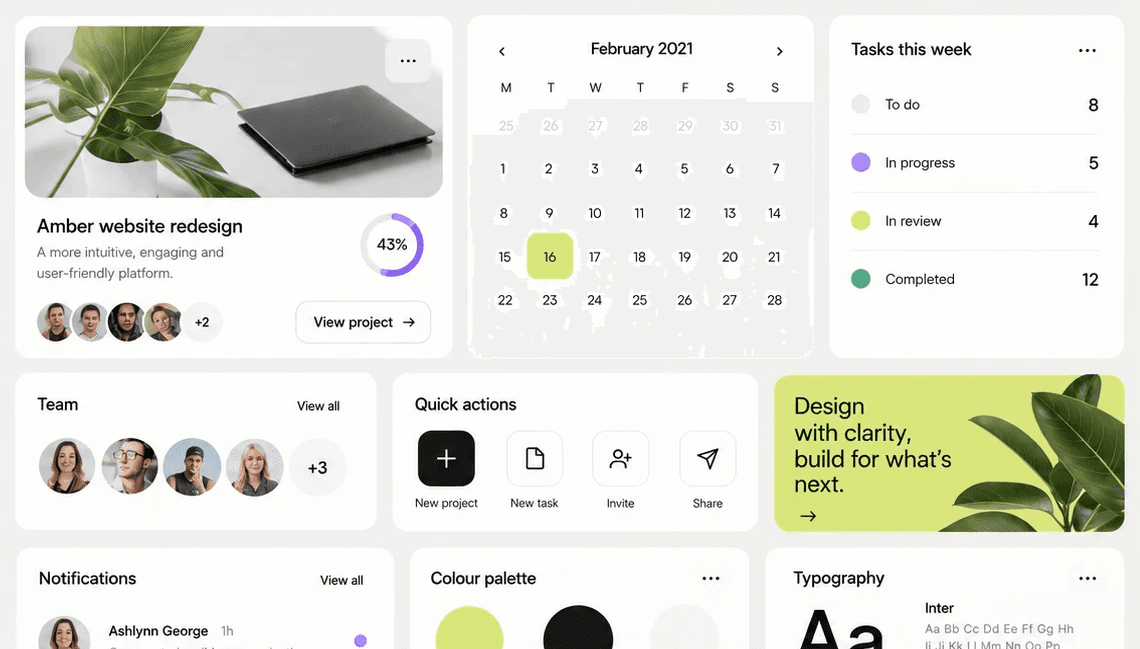
As digital products move faster and AI becomes part of the design and development workflow, the challenge is no longer simply producing more screens. It is making sure everything produced still feels like it belongs to the same product.
That is where a strong design system earns its value.
A design system is more than a component library
Buttons, inputs, typography, colour tokens and spacing rules are important, but they are only the visible layer.
A good design system captures the logic behind the interface. It establishes how components behave, how layouts respond, how hierarchy is created and where designers have freedom to make decisions.
The goal isn’t to remove creativity. It is to remove unnecessary decisions.
When foundational patterns are already solved, designers can spend more time thinking about the user experience rather than repeatedly deciding how a dropdown should look.
AI makes systems more valuable
AI can now generate interfaces and working prototypes incredibly quickly. But without constraints, speed creates inconsistency just as quickly.
A well-defined design system gives AI something to work within.
Instead of asking AI to simply design a dashboard, we can give it existing components, design tokens, interaction patterns and layout rules. The output becomes an extension of the product rather than another interpretation of it.
This is an important shift for senior UX/UI designers. Our role is becoming less about designing every individual screen and more about defining the system that makes good screens repeatable.
Consistency is only the beginning
The real value of a design system is scalability.
A strong system creates a shared language between design and development, speeds up prototyping, reduces duplicated work and makes future product decisions easier.
But the best design systems aren’t rigid libraries.
They provide enough structure to protect the product while leaving enough flexibility for it to evolve.
That balance between consistency and adaptability is what turns a collection of components into a real design system.
As digital products move faster and AI becomes part of the design and development workflow, the challenge is no longer simply producing more screens. It is making sure everything produced still feels like it belongs to the same product.
That is where a strong design system earns its value.
A design system is more than a component library
Buttons, inputs, typography, colour tokens and spacing rules are important, but they are only the visible layer.
A good design system captures the logic behind the interface. It establishes how components behave, how layouts respond, how hierarchy is created and where designers have freedom to make decisions.
The goal isn’t to remove creativity. It is to remove unnecessary decisions.
When foundational patterns are already solved, designers can spend more time thinking about the user experience rather than repeatedly deciding how a dropdown should look.
AI makes systems more valuable
AI can now generate interfaces and working prototypes incredibly quickly. But without constraints, speed creates inconsistency just as quickly.
A well-defined design system gives AI something to work within.
Instead of asking AI to simply design a dashboard, we can give it existing components, design tokens, interaction patterns and layout rules. The output becomes an extension of the product rather than another interpretation of it.
This is an important shift for senior UX/UI designers. Our role is becoming less about designing every individual screen and more about defining the system that makes good screens repeatable.
Consistency is only the beginning
The real value of a design system is scalability.
A strong system creates a shared language between design and development, speeds up prototyping, reduces duplicated work and makes future product decisions easier.
But the best design systems aren’t rigid libraries.
They provide enough structure to protect the product while leaving enough flexibility for it to evolve.
That balance between consistency and adaptability is what turns a collection of components into a real design system.